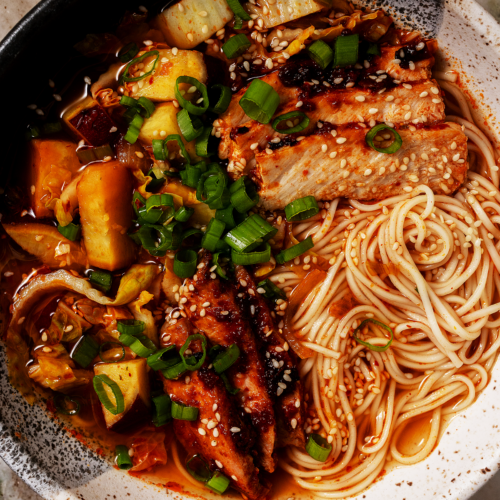
Gochujang Pork Ramen
This gochujang pork ramen is loaded with sweet and spicy pork, Korean sweet potatoes, veggies, and bouncy ramen noodles.
Print
Pin
Share on Facebook
Servings: 4
Calories: 633kcal
Equipment
Ingredients
Gochujang pork:
- 1¼ pounds boneless pork chops (center-cut pork chops)
- 2 teaspoons kimchi seasoning (see Note 1)
- 2 tablespoons gochujang
- 1 tablespoon honey (plus more to taste)
- ½ cup water
- 1 tablespoon neutral oil
- Salt to taste
Ramen:
- 1 tablespoon neutral oil
- 1 yellow onion (peeled, halved, and thinly sliced lengthwise)
- 1 Korean sweet potato (scrubbed and diced into bite-sized cubes)
- 2 tablespoons gochujang
- 2 teaspoons kimchi seasoning (plus more to taste; see Note 2)
- 5 scallions (trimmed and minced; white and green parts kept separate)
- 6 cups water
- ½ head napa cabbage (about ¾ pound total, trimmed and thinly sliced)
- 8 ounces dry ramen noodles (see Note 3)
- 3 tablespoons tamari
- 2 tablespoons mirin
- 2 teaspoons sesame oil
- Salt to taste
For serving:
Instructions
Roast the pork:
- Preheat the oven to 400ºF.
- Pat the pork dry and season with 2 teaspoons kimchi seasoning.
- Meanwhile, whisk together 2 tablespoons gochujang, 1 tablespoon honey, and ½ cup water until smooth. Set aside.
- Heat 1 tablespoon neutral oil in an ovenproof skillet over medium heat. Add the pork and cook for 2 to 3 minutes per side.
- Pour the sauce over the pork and transfer to the oven for 14 to 16 minutes or until it reaches 145ºF.
Make the ramen broth:
- Meanwhile, heat 1 tablespoon of neutral oil in a large pot over medium heat. Add the onion and sweet potato and season with salt. Cook for 2 to 3 minutes. Add 2 tablespoons gochujang, 2 teaspoons kimchi seasoning, and the white parts of the scallions. Sauté for 1 to 2 minutes, coating the sweet potatoes in the kimchi paste.
- Pour in the water and bring to a boil. Reduce the heat and simmer for 15 minutes. Add the cabbage and simmer for an additional 15 to 20 minutes or until the sweet potatoes are tender. Taste and season.
Make the noodles:
- Bring a medium pot of water to a boil. Cook the ramen according to package directions. Drain and divide between bowls.
Finish the pork:
- Remove the pork from the oven. Transfer the pork to a cutting board and tent with foil. Rest for 5 to 10 minutes before slicing into thin strips.
- Return the skillet of sauce to the stovetop over medium heat. Let it bubble for 3 to 4 minutes to thicken slightly. Turn off the heat.
- Arrange the sliced pork on a serving platter and spoon the sauce over the pork. Scatter half the reserved scallion greens on top and finish with a sprinkle of sesame seeds. Keep warm.
Finish the ramen broth:
- Add 3 tablespoons tamari, 2 tablespoons mirin, and 2 teaspoons sesame oil to the ramen broth, and then simmer for 5 minutes. Taste and season before turning off the heat.
To serve:
- Ladle the warm broth over the cooked ramen noodles, and then place a few pieces of pork on top and serve with the remaining scallion greens. Sprinkle sesame seeds on top of each bowl. Enjoy!
Notes
Note 1: If your kimchi seasoning doesn’t have salt, be sure to season with 1¼ teaspoons kosher salt in addition to the kimchi seasoning.
Note 2: If your kimchi seasoning doesn’t have salt, taste the broth and add salt as needed.
Note 3: If using dry ramen, 8 to 10 ounces will serve 4 people. If using fresh or frozen ramen, use 20 ounces of uncooked noodles to serve 4 people.
Nutrition
Calories: 633kcal | Carbohydrates: 56g | Protein: 40g | Fat: 28g | Sodium: 2078mg | Fiber: 4g | Sugar: 12g | Vitamin C: 38mg
Tried this recipe?Mention @triedandtruerecipes or tag #triedandtruerecipes so I can feature you in my feed!