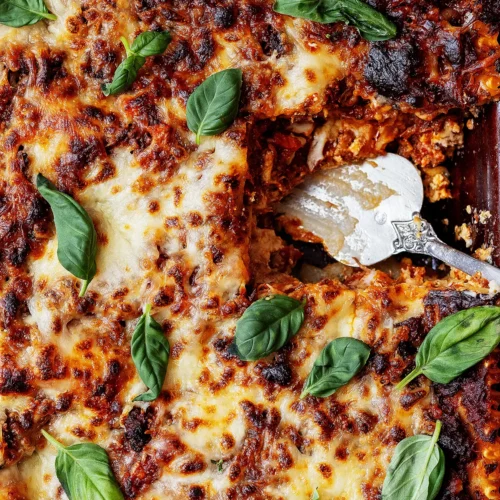
Short Rib Lasagna
Is there anything more comforting than a big slice of lasagna? In this short rib lasagna, we take an Italian lasagna recipe to new levels of comfort.
Print
Pin
Share on Facebook
Servings: 12
Calories: 701kcal
Ingredients
Short rib ragù:
- 4 ounces diced pancetta
- 1½ pounds boneless short ribs
- 1 pound hot Italian sausage (casings removed or use ground beef, See Note 1)
- 2 teaspoons extra virgin olive oil (if needed)
- 1 yellow onion (peeled and diced)
- 2 carrots (peeled and finely diced)
- 2 ribs celery (trimmed and finely diced)
- 2 tablespoons butter
- 6 cloves garlic (peeled and minced)
- 2 tablespoons tomato paste
- 1 cup dry red wine
- 2 (28-ounce) cans whole peeled tomatoes
- 2 bay leaves
- 1 teaspoon sugar (optional)
- 1 cup beef stock (plus more, if needed)
- 1½ teaspoons kosher salt (plus more to taste)
- ¾ teaspoon black pepper (plus more to taste)
- Crushed red pepper
Béchamel sauce:
- ½ cup butter
- ½ cup flour
- 4 cups whole milk
- ½ teaspoon kosher salt
- ½ teaspoon white pepper
- ¼ teaspoon nutmeg
Ricotta filling:
- 16 ounces ricotta cheese (whole milk)
- 2 eggs
- ⅓ cup parsley (loosely packed and finely chopped)
- ½ cup basil (loosely packed and finely chopped)
- 1 ounce Parmigiano-Reggiano (freshly grated with a microplane; yielding about ½ cup tightly packed grated cheese)
- ½ cup grated mozzarella
- Salt and pepper
For assembly:
- 12 sheets dry lasagne (see Note 2)
- 1½ cups grated mozzarella
- Basil leaves (optional, for serving)
Instructions
Cook the pancetta:
- Preheat oven to 350ºF.
- Place the diced pancetta in a large, oven-safe pot. Turn the heat to medium. Stir occasionally for 4 to 5 minutes until the fat renders and the pancetta browns. Remove the pancetta from the pot and transfer to a large bowl.
Brown the short ribs:
- Pat the short ribs dry and season with 1½ teaspoons kosher salt and ¾ teaspoon black pepper. Place the short ribs in the pancetta fat and cook over medium-high heat for 3 to 5 minutes per side until well browned on all sides. Transfer them to the bowl of pancetta.
- Add the hot Italian sausage and cook, breaking it up with a spoon for 15 minutes until the sausage is browned and cooked through. Transfer the cooked sausage to the bowl of pancetta and short ribs.
Cook the aromatics:
- If the pot seems dry, add 2 teaspoons of extra virgin olive oil and turn the heat to medium-high.
- Add the diced onion, celery, and carrots. Sauté for 5 to 7 minutes. Season the vegetables with salt and pepper.
Brown the tomato paste:
- Add the butter to the aromatics. Once melted, add the minced garlic and sauté for 45 seconds. Add the tomato paste and lightly mash it into the aromatics for 2 minutes until it deepens in color. Be careful not to burn the garlic.
- Pour in 1 cup of red wine and turn the heat to high. Whisk the wine into the paste and continue until the wine begins to boil. Boil for 5 minutes until it reduces slightly.
Simmer the ragù:
- Add the canned tomatoes and 1 cup beef stock. Stir in all of the meat from the bowl. Season the sauce with salt, pepper, sugar, and crushed red pepper. Add the bay leaves. Bring to a boil.
- Once boiling, cover the pot and turn off the heat. Transfer to the preheated oven for 3 hours or until the short ribs can be shredded easily with a fork. Check the short ribs occasionally to ensure they are not sticking to the pot, and add more beef stock as needed.
- Remove the pot from the oven. Taste the ragù and season to your preferences. See Note 3.
Shred the short ribs:
- Return the pot to the stovetop. If you refrigerated the ragù, remove the hardened fat layer from the ragù. Otherwise, skim off as much of the fat as possible.
- Turn the heat to medium-low and allow the ragù to simmer uncovered for 15 minutes. Add more beef stock if the liquid evaporates too quickly. Shred the short ribs, mash the whole tomatoes, and discard the bay leaves. Taste and season once more before turning off the heat.
Prepare the ricotta mixture:
- As the ragù finishes simmering, make the ricotta filling. Combine all of the ingredients for the ricotta mixture in a bowl. Use a whisk or an electric hand-mixer and beat until smooth and creamy. Season with salt and pepper to taste.
Prepare the béchamel:
- Warm 4 cups of whole milk in a microwave-safe bowl or glass measuring cup for 2 minutes. Set aside.
- Melt ½ cup of butter in a large saucepan over medium heat. Once bubbly, add ½ cup flour and stir into the butter for 1 to 2 minutes.
- Add 1 cup of warm milk and whisk until a slurry forms. Adjust the heat as needed to prevent scorching. Continue adding the remaining milk—whisking well after each addition—until fully incorporated. Simmer for 5 to 10 minutes over medium-low heat, whisking regularly, until the béchamel is smooth and thickened. Season with ½ teaspoon kosher salt, ½ teaspoon white pepper, and ¼ teaspoon nutmeg.
Cook the pasta:
- Bring a large pot of generously salted water to a boil. Cook the lasagna sheets according to package directions, often 3 to 4 minutes as they will continue to cook in the oven. Drain and arrange the sheets on a lightly oiled baking sheet so they don’t stick.
Assemble the lasagna:
- Preheat oven to 350ºF.
- Lightly grease a 9×13 baking dish. Add ⅓ cup of the béchamel and use a rubber spatula to smooth it into an even layer.
- Place four lasagna sheets over the béchamel, avoiding overlap if possible. Use kitchen shears to trim the lasagna if they are too long.
- Spoon half of the ricotta mixture on top of the lasagna sheets and use the rubber spatula to smooth it out. Add one-third of the ragù on top of the ricotta. Finish with half of the remaining béchamel sauce.
- Place four more lasagna sheets on top of the béchamel. Add the remaining ricotta mixture and half of the remaining ragù. Add the remaining béchamel sauce on top.
- Place the final four lasagna sheets on top. Add the rest of the ragù and smooth it out. See Note 4.
Bake the lasagna:
- Cover the lasagna with foil. Transfer to the oven for 45 minutes. Remove from the oven and remove the foil. Sprinkle 1½ cups of grated mozzarella cheese on top. Return to the oven and bake uncovered for 15 minutes.
- After 15 minutes, broil the lasagna for 3 to 4 minutes to brown the cheese further, if desired.
To serve:
- Allow the lasagna to cool for 15 minutes. Slice into portions and garnish with basil leaves and freshly grated Parmigiano-Reggiano, if you like. Enjoy!
Notes
Note 1: For an even meatier lasagna, you can use both hot Italian sausage and ground beef.
Note 2: This recipe is for a 3-layer lasagna. A standard 16-ounce box of dry lasagna will contain 12 to 18 sheets depending on the brand. I like to use around 12 sheets, meaning I have 3 layers of 4 sheets of lasagna. If you want to use the entire 16-ounce box, you may need to add an additional layer and divide up the fillings accordingly or overlap the lasagna sheets more.
Note 3: You can allow the ragù to cool completely and transfer it to the refrigerator overnight or for a few hours. I recommend refrigerating it to allow the fat to harden for easy removal the next day. You can also skip this step but note that short ribs produce a lot of fat, and it will be more challenging to remove the fat when it is liquefied.
Note 4: Lasagna can be assembled 36 to 48 hours in advance and kept refrigerated. If you’d like to assemble more than 2 days in advance, cover the entire casserole dish with two layers of tightly wrapped foil and transfer it to the freezer. If the lasagna is frozen (not thawed), it will need up to 90 minutes to bake in the oven. If you’ve completely thawed the lasagna from the freezer, it will need up to 60 minutes to bake.
Nutrition
Calories: 701kcal | Carbohydrates: 35g | Protein: 35g | Fat: 44g | Sodium: 1150mg | Fiber: 2g | Sugar: 7g | Vitamin C: 6mg
Tried this recipe?Mention @triedandtruerecipes or tag #triedandtruerecipes so I can feature you in my feed!